THE LUMINARIUM

What are you paying attention to, and who decided?

And if a machine can finish your sentence, your sketch or your plan, what is left that is still yours?

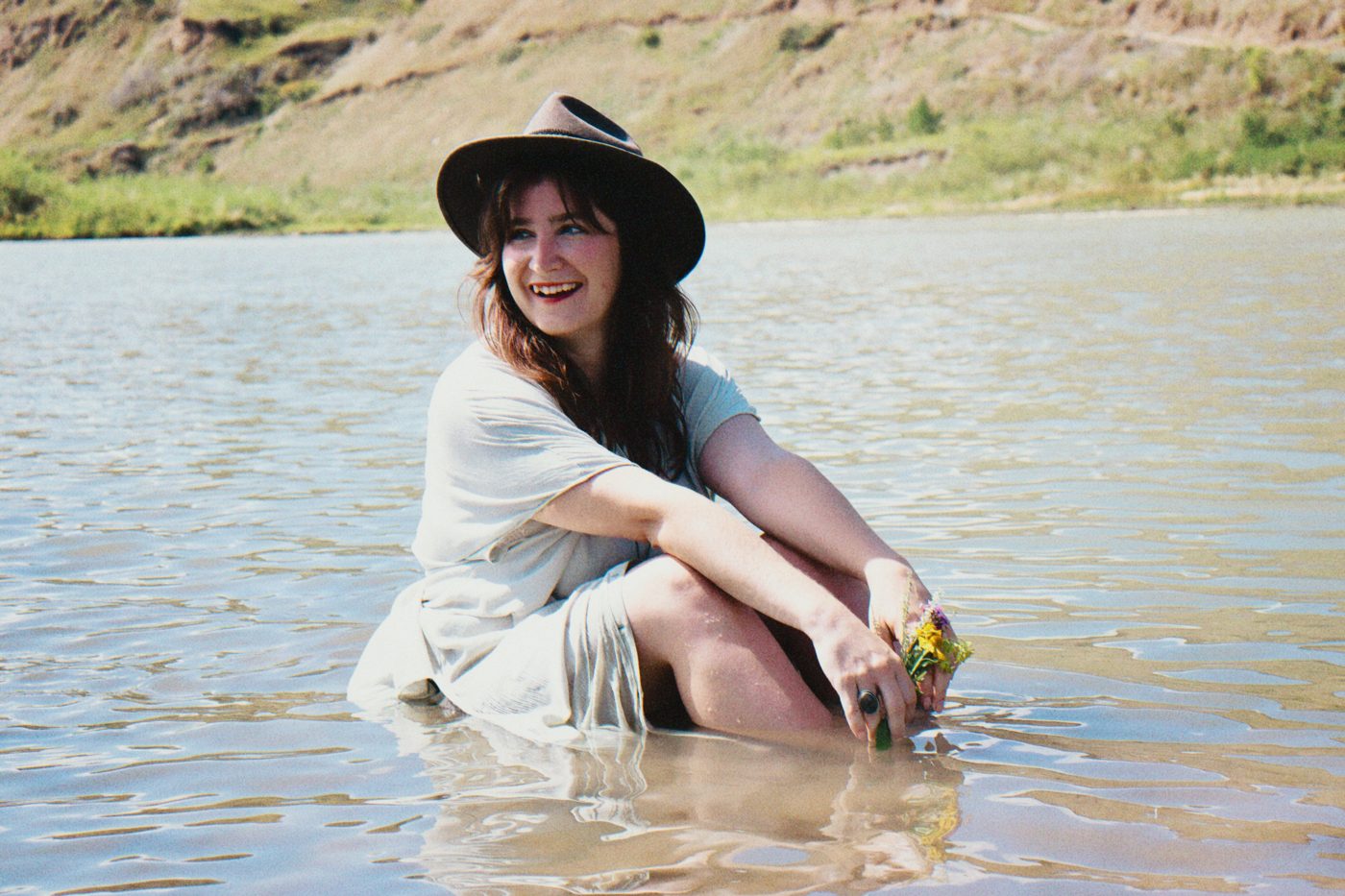
Raine smiling and looking over her shoulder, sitting in shallow river water in a wide-brimmed hat, holding a small bunch of wildflowers, with grassy hills behind her.

I'm Raine, an artist, writer and creative researcher living near the Rocky Mountains in Canada, and I spend my days exploring those questions and more, so here is what you can expect from me:

As an artist

I make collage poetry, ink and watercolor, and hybrid work with generative AI. Every piece begins with something ordinary I noticed and followed, and together they make a living record of a mind in conversation with the world.

Wander the Specimen Table

As a creative AI consultant

I work with creatives, educators and organizations. I help them understand AI and where it fits into their practice (or where it doesn't), and how to navigate a changing world with their values and creativity intact.

Book a Field Consultation

The Artist

Raine Sillito
Multimodal Artist. Writer. Creative Researcher.

Artist Statement

I am a multidisciplinary artist and writer. My work explores attention, living systems and the process of finding meaning in ordinary life through poetry, visual art and generative media. I like to explore how meaning emerges in small moments of perception. Light shifting across the room, birds hopping on branches, stumbling across mushrooms growing in the grass, bubbles popping in a sink of dirty dishes, these small ordinary things that make up human experience.

My work often exists in the space between the ordinary and the mystery. I am drawn to the threshold where the familiar begins to reveal something deeper, where the everyday world opens briefly into wonder, awe, a sense of belonging. I am deeply interested in creativity as a living process of self-creation and much like living systems continually remake themselves, creative work evolves through cycles of attention, imagination, experimentation.

I work across visual art, poetry, writing and research within a framework I call An Ecology of Attention, an investigation into how attention functions as a living system, how contemporary digital culture disrupts and fragments our attention and how creative practice restores our orientation in a very noisy world.

We live in a digital age that demands our attention and too often hijacks it. My framework is also about stewardship, how to be a responsible steward of your own attention and refuse to outsource everything that makes us who we are to the machines.

The Ecology of Attention emerged from years of personal study at the intersection of cybernetics, the study of feedback and communication in living systems, and autopoiesis and living systems theory, and story fields, the narrative environments we inhabit and co-create as we conserve culture through language. It also emerged from my own creative process of finding ordinary magic, the micro-moments of attention that reveal wonder in ordinary things and that have shaped both my artwork and my understanding of what it means to be alive and paying attention. That process became my artwork and my artwork became a framework and the framework became a practice.

I live and work near the Rocky Mountains in Canada where I homeschool my children and pay close attention to ordinary things.

Training and Credentials

  • Expressive Arts, Prairie Expressive Arts Institute, Level 1
  • Speech and Drama, ATCL, Trinity College London
  • MA, Transformative Learning
  • MA, Generative AI for Creatives, Barcelona School of Art and Design (in progress)
  • AI Ethics: IBM SkillsBuild; UNESCO Global MOOC on the Ethics of AI (Coursera, with LG AI Research)
  • Independent Research in Creative Technology and Cybernetics

Studio Process

My visual work begins in the traditional way, with pencil and paper. From there the work may develop with ink and watercolor, or move into a digital environment where I refine the drawing, develop color and detail through digital painting.

I also work in a hybrid way with generative AI. I don't believe AI should take over our creative practice, so I treat it as a new medium to work within, one more material on the table alongside paper, ink and watercolor.
Field Ecology

attention as a living relational system

hover, tap or tab to a circle to read its definition

Something pulls at our attention. What we attend to shapes what we perceive, perception generates meaning, accumulated meaning forms identity, and identity directs how we participate in the world. Our participation reshapes the environments we live in, which in turn influences what draws our attention next. The loop never ends.

Contemporary digital culture disrupts that loop. Algorithmic media, constant notification and extractive platforms capture attention from outside the self, and the result is identity drift, meaning collapse and a low, steady disorientation.

Creative Practices Restore Attention

Collage, poetry, mixed media, field observation, slow walking and analog ritual work as mechanisms of perceptual interruption and reorientation. They are not therapy and they are not productivity, they are a way of returning attention to direct experience so meaning can emerge on its own again.

My central principle for working with AI is that it belongs downstream of human intention, never upstream of it. AI can offload mental load, and it cannot do the meaning-making.

Current Areas of Research

Specimens

a naturalist collects what the field offers

Here is a collection of my work that has emerged from years of attentional practices, looking slowly, blending hand analog work with digital work and generative AI, following processes where it leads and learning to trust what ordinary life offers when you are paying close enough attention. I do collage and mixed media pieces. I work with watercolor and ink. I also do hybrid art with generative AI and digital graphic design. I focus on things my attention has landed on and wanted to capture, collect or explore. These are, in a way, a living record of a mind in relationship with the world it is moving through. My poetry follows this work in the same way.

Field Notes on Substack

Essays, poems and field notes from the practice, published every week.

Read on Substack

Work With Me

A field naturalist never knows exactly what they will find, so I enter every collaboration with a question, a set of skills and a willingness to follow what emerges. Here is what I am offering right now.

Workshops

A Field Guide to AI

workshops for anyone who is curious, skeptical or quietly panicking about AI

Who I am

I'm an artist, writer and researcher, and a mother trying to work out how to live and work in the age of AI. I was terrified of what it meant for my work, so I built myself a framework, not to use AI better but to keep being a creative person in a world that keeps asking me to hand my work to a machine. To build it I first had to understand AI: how it works, where it genuinely helps and where it quietly costs us something we don't notice until it's gone.

My own practice is collage and poetry: cutting, layering, finding. Lately I've pulled AI into it too, carefully, as one material among many, while studying generative AI and creativity formally. I'm not coming at this from a lab or a boardroom. I'm coming at it from the cutting table.

What I'm talking about

Attention is a living relationship, closer to a garden than a bank account. Research suggests that leaning on AI for writing can weaken the brain's own engagement with the task, and that when many of us lean on the same tools, the range of ideas we produce together narrows.

None of that makes AI the enemy. It means attention and judgment need tending on purpose, and that is what these sessions teach: not a list of tools but a practice.

Enquire about a workshop

Current Offerings

Four Ways of Thinking

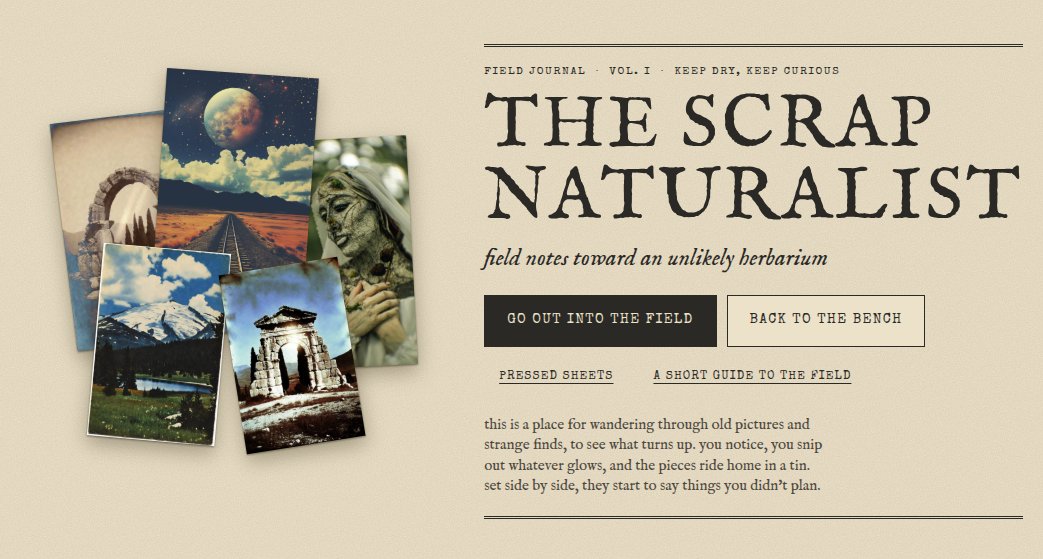
Screenshot of The Scrap Naturalist, an interactive field journal for collecting and arranging fragments of old pictures.
Built in the field

The Scrap Naturalist

An interactive field journal for wandering through old pictures, snipping out the fragments that catch your eye, keeping them in a tin and pressing them into new compositions. It is one example of the experimental digital environments I design: spaces that slow you down and reward noticing instead of keeping you scrolling.

Wander into The Scrap Naturalist

Workshop Topics

Any of these can be shaped to your group, in person or remote, in short blocks if that suits your team.

How I use AI

AI comes downstream of human intention, never upstream of it. It never writes a client's plan or recommendation, and no client information is ever entered into an AI tool. The full Luminarium AI use policy covers scope, approved and prohibited uses, data handling and disclosure.

Request the policy

Find Me in the Field

Get In Touch

Tell me a little about what you're working on and I'll reply within a few days.